
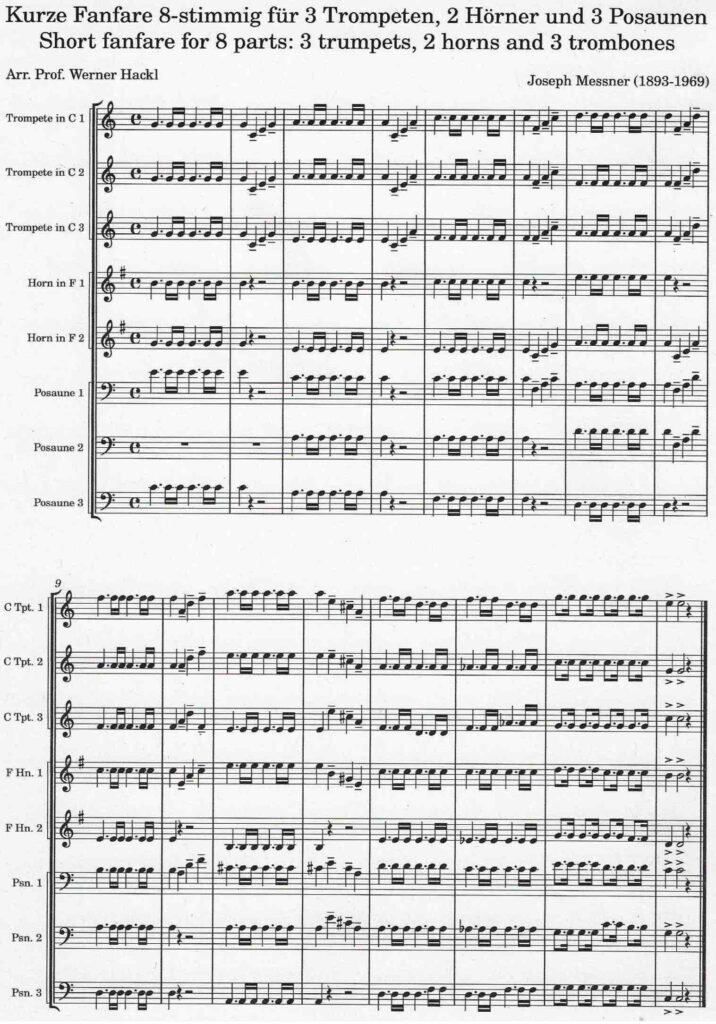
Joseph Messner (1893-1969) Kurze Fanfare 8-stimmig für 3 Trompeten, 2 Hörner, 3 Posaunen; Short fanfare for 8 parts: 3 trumpets, 2 horns, 3 trombones
Joseph Messner – in Schwaz/Tirol geboren – erhielt seit dem fünften Lebensjahr vom Organisten der Stadtpfarrkirche Schwaz Gesang-, Violin- und Klavierunterricht. Der Eintritt ins Salzburger Kapellhaus war eine entscheidende Weichenstellung für den späteren Werdegang Messners. Im erzbischöflichen Gymnasium legte er die Matura ab und trat danach in das Salzburger Priesterseminar ein. Zum Priester geweiht, wurde Messner 1922 zum zweiten Domorganisten an den Salzburger Dom berufen. Als Domkapellmeister ab 1926 kamen zu seinen Aufgaben zur musikalischen Messgestaltung noch als Bestandteil der Salzburger Festspiele, Domkonzerte hinzu. Messner, eine Musikerpersönlichkeit ersten Ranges, reorganisierte nach dem Zweiten Weltkrieg die Dommusik in Salzburg. Gesundheitliche Probleme, sowohl als auch negative Kritik zwangen ihn, 1967 die Leitung der Domkonzerte niederzulegen.
Besonders große Erfolge erntete Messner als Komponist von Bläserwerken, die Sinn für dramaturgische Ausgewogenheit in der melodischen Erfindungskraft und der motivisch-thematischen Prägnanz, andererseits in der registerhaften Instrumentation mit quantitativen Steigerungen zeigen.
Zur Eröffnung eines Festes eignet sich dieser kurze Blechbläsersatz vorzüglich. [Dauer: 0:42]

Joseph Messner, born in Schwaz, Tyrol, received singing, violin, and piano lessons from the organist of the Schwaz parish church from the age of five. Entering the Salzburg Kapellhaus (chapel house) proved to be a decisive turning point in Messner’s later career. He completed his secondary education at the archiepiscopal Gymnasium and subsequently entered the Salzburg seminary. Ordained a priest, Messner was appointed second cathedral organist at Salzburg Cathedral in 1922. As cathedral choirmaster from 1926, his duties, in addition to the musical arrangements for Mass, also included cathedral concerts as part of the Salzburg Festival. Messner, a musician of the first rank, reorganized the cathedral music in Salzburg after the Second World War. Health problems, as well as negative criticism, forced him to relinquish his position as director of the cathedral concerts in 1967.
Messner achieved particularly great success as a composer of wind works, which demonstrate a sense of dramatic balance in their melodic inventiveness and motivic-thematic conciseness, as well as in their register-based instrumentation with quantitative climaxes.
This short brass ensemble piece is ideally suited for opening a celebration. [Duration: 0:42]
Joseph Messner, born in Schwaz, Tyrol, received singing, violin, and piano lessons from the organist of the Schwaz parish church from the age of five. Entering the Salzburg Kapellhaus (chapel house) proved to be a decisive turning point in Messner’s later career. He completed his secondary education at the archiepiscopal Gymnasium and subsequently entered the Salzburg seminary. Ordained a priest, Messner was appointed second cathedral organist at Salzburg Cathedral in 1922. As cathedral choirmaster from 1926, his duties, in addition to the musical arrangements for Mass, also included cathedral concerts as part of the Salzburg Festival. Messner, a musician of the first rank, reorganized the cathedral music in Salzburg after the Second World War. Health problems, as well as negative criticism, forced him to relinquish his position as director of the cathedral concerts in 1967.
Messner achieved particularly great success as a composer of wind works, which demonstrate a sense of dramatic balance in their melodic inventiveness and motivic-thematic conciseness, as well as in their register-based instrumentation with quantitative climaxes.
This short brass ensemble piece is ideally suited for opening a celebration. [Duration: 0:42]
| sound sample / Tonbeispiel | score/parts PDF download: € 11,- | add to cart / in den Warenkorb |