
Franz Schmidt (1874-1939) „Fuga solemnis“ für Orgel, Blechbläser, Pauken und Tam-Tam

Die Orgelnoten der Fuga solemnis sind bei Universal Edition UE 35 324 erschienen. Die Noten für Blechbläser sind hier erstmalig (Partitur und Stimmen) im Druck erhältlich.
Das Werk beginnt mit Orgel solo, ab Takt 173 (Tranquillo) gesellen sich die Blechbläser hinzu.

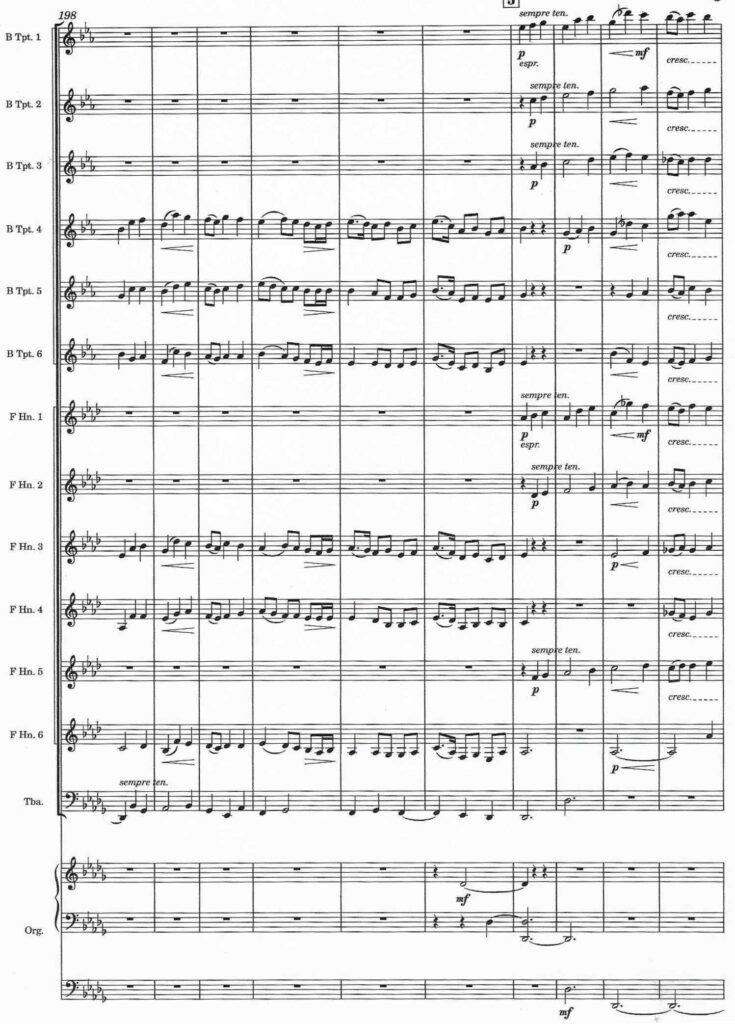
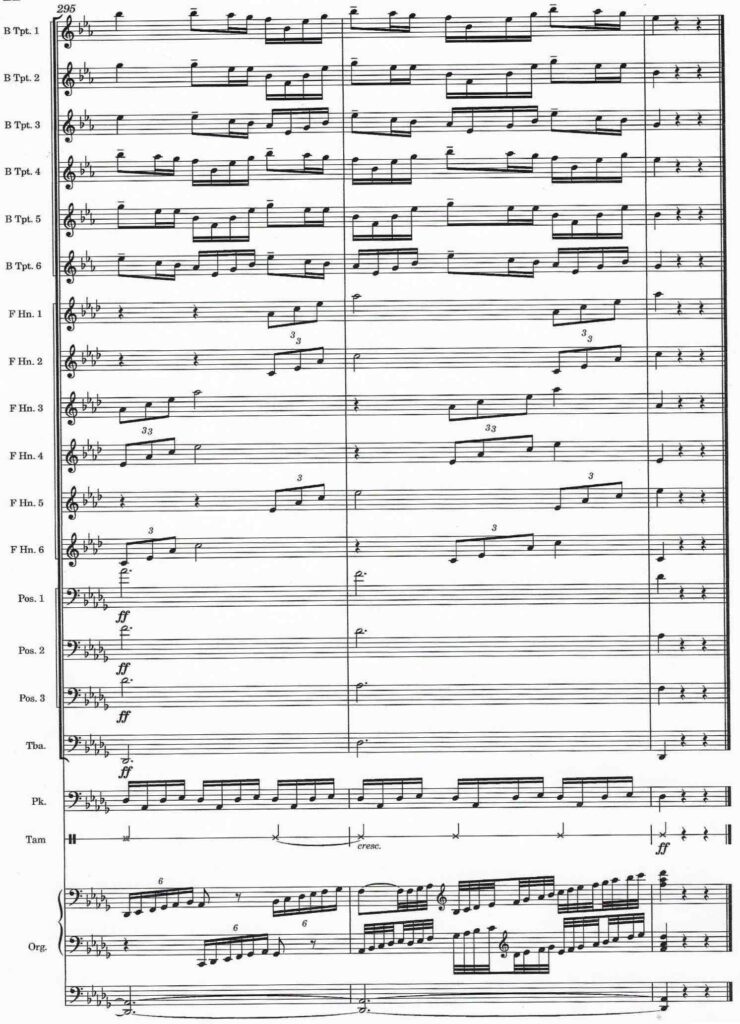
Franz Schmidt komponierte 1937 seine „Fuga solemnis“ anlässlich der Einweihung der Rundfunkorgel im Großen Sendesaal zu Wien. Die Fuga solemnis ist Schmidts letztes monumentale Fugenwerk für die Orgel, das seinem Enstehungsanlass entsprechend durch obligate Heranziehung von 16 Blechbläsern, Pauken und Tamtam klanglich kolossalisiert ist. Die „Fuga“ ist eine Doppelfuge, dich sich in zwei annähernd gleich große Formteile gliedert: Der erste Teil ist ein umfangreiches Orgelsolo, in dem sich zwei Fugensubjekte in variativen Durchführungen zu einer äußerst kunstvollen kontrapunktischen Verflechtung in der vierten Durchführung steigern, um dann vom Bläserchor mit dem Zitat des ersten Fugenthemas abgelöst zu werden. Bläser und Orgel – wobei der Orgel das erste Thema, dem Bläserchor das zweite übertragen ist – bringen nunmehr eine grandiose freie Rekapitulation der beiden ersten Durchführungen der Orgelfuge, jedoch nicht mehr im strengen Fugensatz; die Themen werden gleichsam als Choral behandelt und von den Blechbläsern und der immer reicher eingesetzten Orgel koloristische und dynamisch gesteigert.

Franz Schmidt composed his “Fuga solemnis” in 1937 to mark the inauguration of the radio organ in the Great Broadcasting Hall in Vienna. The Fuga solemnis is Schmidt’s last monumental fugue for the organ, and, in keeping with its purpose, is sonically colossal through the obligatory inclusion of 16 brass instruments, timpani, and tam-tam. The “Fuga” is a double fugue, divided into two approximately equal sections: The first section is an extensive organ solo in which two fugue subjects develop through variations, culminating in an extremely artful contrapuntal interweaving in the fourth development, before being succeeded by the brass ensemble with a quotation of the first fugue subject. Wind instruments and organ – with the first theme assigned to the organ and the second to the wind ensemble – now bring a magnificent free recapitulation of the first two developments of the organ fugue, but no longer in strict fugal form; the themes are treated as a kind of chorale and are enhanced in terms of color and dynamics by the brass instruments and the increasingly richly used organ.
| sound sample / Tonbeispiel | score/parts PDF download: € 49,- | add to cart / in den Warenkorb |